
Your Situation
$
$
NJ Transit estimate
| Tax line | NYC Resident | NJ Commuter | CT Commuter |
|---|
Live in New Jersey or Connecticut but work in New York City? You generally avoid NYC local income tax, which can save you thousands of dollars each year. However, commuting costs can add up quickly. Compare the actual numbers for your salary to see how much you could save.
The Commuter Math in Plain English:
NJ residents working in NYC save $3,000–$8,000/year in city taxes but spend $3,000–$5,000 more on commuting.
The financial difference is closer than most people expect — and time costs matter too.
How the NYC Local Tax Savings Compares by Salary:
NYC’s local income tax ranges from 3.078% to 3.876%.
On a $100K salary, that can mean roughly $3,500 in annual savings for NJ or CT residents who work in NYC.
But taxes are only part of the picture. Here’s how the numbers compare at different salary levels.
| Salary | NYC Resident Take-Home | NJ Commuter Take-Home | NJ Commute Cost | Net NJ Advantage |
| $75000 | $49,312 | $52,038 | −$3,600 | +$1,126/yr |
| $100,000 | $63,577 | $67,125 | −$3,600 | +$1,948/yr |
| $150,000 | $91,822 | $97,247 | −$3,600 | +$1,825/yr |
| $200,000 | $118,653 | $126,100 | −$4,800 | +$2,647/yr |
These estimates assume a single filer. The figures for NJ commuters include New York State income tax, while the New Jersey tax liability is offset by available state tax credits. Commuting expenses are then deducted to show the net benefit of living in NJ.
Actual savings may vary based on housing costs, commuting expenses, and other personal factors.
Understanding the Tax Rules:
NYC Residents:
If you reside in New York City, your salary is subject to four main types of taxes:
- Federal income tax
- New York State income tax
- New York City local income tax
- FICA tax
The New York City local tax is an additional income tax levied by the city, typically ranging from 3.078% to 3.876%.
It applies specifically to individuals living in any of New York City’s five boroughs and is paid in addition to federal, state, and FICA taxes.
NJ Residents Working in NYC:
If you reside in New Jersey but work in New York City, your income is generally subject to:
- Federal income tax
- New York State tax on wages earned in New York
- FICA tax
- New Jersey State tax
However, you do not pay New York City local income tax because you live outside the city limits.
New Jersey also provides a credit for taxes paid to New York, so generally, you will not pay tax twice on the same income.
In most cases, the New York State tax you pay satisfies your state income tax liability, and there is no need to pay additional New Jersey State tax.
CT Residents Working in NYC:
If you live in Connecticut but work in New York City, your income is generally subject to:
- Federal income tax
- New York State tax on wages earned in New York
- FICA taxes
- Connecticut state tax
However, you do not pay the NYC local income tax because you reside outside the city.
Connecticut also provides a tax credit for taxes paid to another state, which helps prevent you from being taxed twice on the same income.
In most cases, this credit reduces or offsets the Connecticut state tax you owe.
The NYC Local Tax Rate:
The NYC local income tax rate ranges from 3.078% to 3.876%.
For someone earning $100,000 a year, this can add up to around $3,500 in local taxes.
At a $200,000 salary, the cost can be roughly $7,500 per year.
NJ and CT residents who work in NYC but live outside the city generally do not pay this NYC local tax, which can create a meaningful tax advantage when living across the state line.
The Commute Reality:
Tax savings can be significant, but daily commuting also entails expenses and consumes time.
If you live outside New York City (NYC) but work in the city, your annual commuting costs can add up quickly.
Let’s take a look at the typical annual cost of commuting in the New York area.
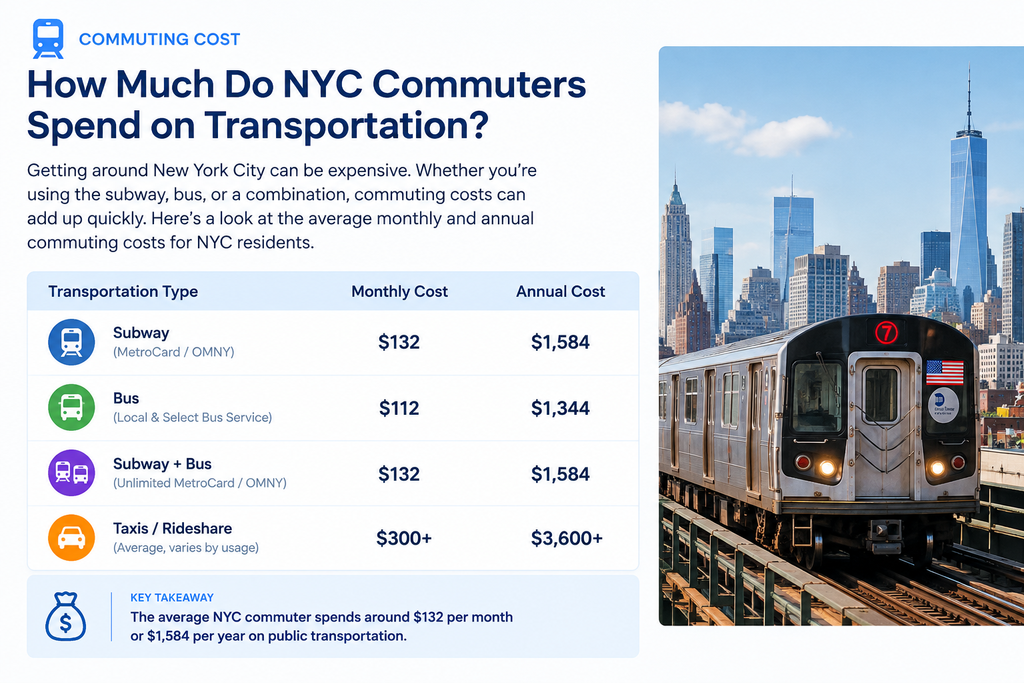
These expenses cover only the cost of commuting.
You should also consider the time spent traveling.
A daily 90-minute commute can add up to approximately 375 hours over the course of a year—time that could have been spent working, being with family, or simply resting.
While this may not show up as a direct financial expense, the time spent commuting is a real part of the overall cost.
Salary-to-Take-Home Comparison:
All examples assume a single filer, with estimated annual commuting costs of $3,600 for NJ residents and $4,800 for CT residents.
These amounts are included when comparing the total financial impact of commuting from each state.
| Salary | NYC Resident | NJ (After Commute) | CT (After Commute) |
| $75,000 | $49,312/yr • $4,109/mo | $48,438/yr • $4,036/mo | $47,838/yr • $3,987/mo |
| $100,000 | $63,577/yr • $5,298/mo | $63,525/yr • $5,294/mo | $62,325/yr • $5,194/mo |
| $150,000 | $91,822/yr • $7,652/mo | $93,647/yr • $7,804/mo | $92,147/yr • $7,679/mo |
| $200,000 | $118,653/yr • $9,888/mo | $121,300/yr • $10,108/mo | $119,400/yr • $9,950/mo |